Woolsey, Georgia: A Town Rooted in Farming
Nov 05, 2026 by Friends of Historic Woolsey
“Woolsey was a cotton town, a real thriving community then.
We had a big cotton gin, and folks were raising
a lot of cotton, and trains stopped right here and loaded up bale after bale.”
— John Ballard McLean, Atlanta Journal and Constitution, 1996
Woolsey, Georgia, grew from agricultural roots. In the late nineteenth century, farming helped shape the community's economy, encouraged local businesses to develop, and connected this small Fayette County town to markets beyond the surrounding countryside.
Cotton and corn were important crops, and agriculture supported the businesses, transportation, and community institutions that developed around the farming population. Woolsey's history demonstrates how the work of the land could influence not only the rural landscape but also the growth and character of an entire town.
Cotton, the Railroad, and a Growing Town
Cotton played a central role in Woolsey's early economy. A large cotton gin served the surrounding farming community, providing an essential link between the fields and the marketplace.The arrival of the railroad in 1888 strengthened that connection. Trains carried agricultural products toward Atlanta and other markets, connecting local farms with a broader economy.
John Ballard McLean's recollection captures the activity that defined Woolsey's cotton trade: trains stopping in town and loading bale after bale. His words offer a vivid picture of a community whose economic life was closely tied to agriculture and transportation.
Cotton was not Woolsey's only important agricultural enterprise. Peaches also played a significant role in the town's history, adding another dimension to its farming economy.
The Peach Packing Plant
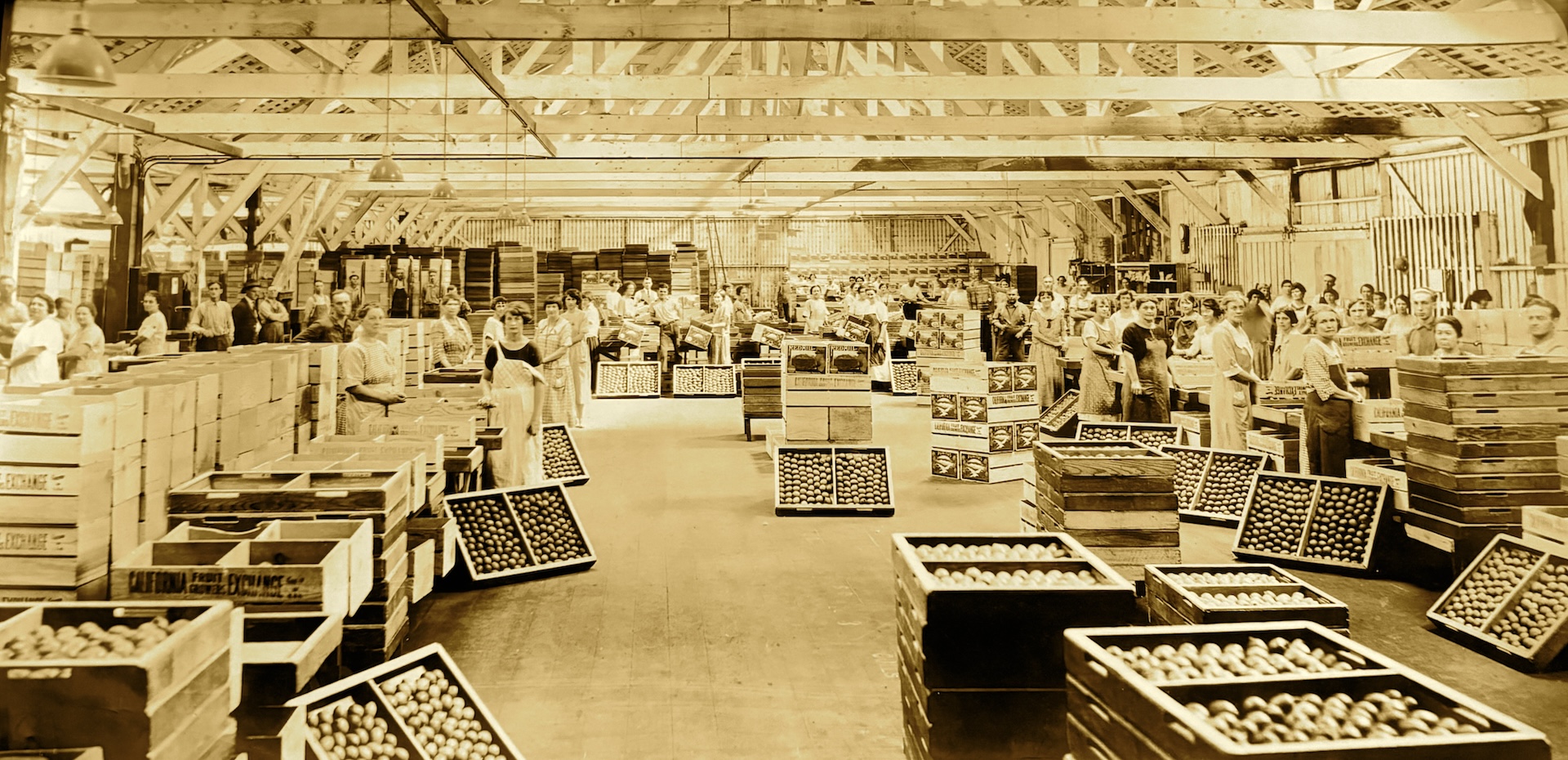
The work associated with the seasonal harvest brought people together and contributed to the town's economic activity. Growing, packing, and shipping peaches connected local agriculture to markets beyond Fayette County, making the peach industry an important part of Woolsey's agricultural heritage.
The Peach Packing Plant in Woolsey offers a remarkable glimpse into this chapter of the town's past. Workers fill the expansive building, surrounded by crates and trays of peaches awaiting shipment. The photograph captures the scale of the operation and the people whose labor helped move the harvest from the orchard toward the marketplace.
The peach packing plant also reminds us that agriculture involved more than the growing of crops. It required facilities, transportation, seasonal workers, and businesses that helped bring agricultural products to consumers.
Alongside cotton and the railroad, peach production and shipping helped establish Woolsey as an active agricultural community.
A Bustling Little Community
Agriculture helped support a surprisingly varied range of businesses and services in Woolsey.
“Woolsey has an interesting past. When I was growing up in Inman, a northern suburb, Woolsey had a grammar school, two stores, a cotton gin, a railroad and a large peach-growing and shipping operation. Before the Great Crash of ‘29 there was a bank,
a nice collection of shops, a doctor, a hotel, and a place that made buggies and wagons.”
— Jim Minter, Some Things I Wish We Wouldn't Forget (and Others I Wish We Could)
a nice collection of shops, a doctor, a hotel, and a place that made buggies and wagons.”
Jim Minter's recollections bring Woolsey's past into focus. The town had the businesses and institutions of an active rural community, supported in part by the agricultural economy surrounding it.
The school served local children, stores supplied everyday needs, and the doctor cared for residents. A bank, hotel, shops, and a buggy and wagon business added to the town's commercial life.
Woolsey was more than a stop along the railroad. It was a community where agriculture, commerce, transportation, and everyday life came together.
Preserving Woolsey's Agricultural Heritage
As transportation changed and agricultural industries evolved, Woolsey changed, too. Many of the businesses that once supported its farming economy disappeared, but their place in the town's history remains important.Historic Woolsey Church is one of the surviving connections to that earlier community. Established in 1889 as Harmony Grove Missionary Baptist Church, it served generations of people whose lives were intertwined with the surrounding farms, businesses, and rural traditions.
The church stands as a reminder that agricultural history is about more than crops and commerce. It is also about the people who built communities, the institutions that brought them together, and the places that carried their stories forward.
Friends of Historic Woolsey, Inc., is committed to restoring, preserving, protecting, conserving, and, where possible, rehabilitating and revitalizing historic buildings, sites, and landscapes that contribute to the cultural heritage in and around Woolsey, Georgia.
Preserving Historic Woolsey Church helps protect a tangible link to the community that developed around agriculture. It also creates an opportunity for future generations to learn how farming shaped Woolsey's economy, influenced its growth, and contributed to its distinctive place in Fayette County history.
Woolsey's agricultural roots are an essential part of its identity. Cotton helped sustain its economy, the railroad connected local farms to distant markets, and the peach packing plant reflected the importance of commercial fruit production. The businesses and institutions that grew alongside these activities helped make Woolsey a thriving rural community.
Woolsey's story is the story of a town shaped by the land, connected by the railroad, and sustained by the people and enterprises that grew from its agricultural roots. Preserving its historic places helps ensure that this important part of Georgia's heritage will continue to be remembered.


Newest Blogs